
Commercial Building and Facade Washing

Commercial building and facade washing is essential for maintaining a clean and professional appearance. Over time, external surfaces can become covered with algae, carbon pollution, dust, mould, traffic film and general weathering. These contaminants not only affect the appearance of a building but can also damage materials, reduce lifespan and impact safety. Professional commercial cleaning restores surfaces and protects them from long term deterioration.
This guide explains how building and facade washing works, the methods used by professionals, and how businesses benefit from regular exterior cleaning. It also covers the safest way to clean brickwork, render, cladding, metal panels and glass facades without causing damage.

What Is Commercial Building and Facade Washing?
Commercial building and facade washing refers to the process of cleaning the external surfaces of commercial properties. This includes brick, stone, render, cladding, metal, glass and composite panels. The aim is to safely remove contaminants and restore a clean and presentable finish.
Professional cleaning companies use a combination of power washing, soft washing, steam cleaning and manual techniques depending on the material. Choosing the correct method is essential to avoid surface damage and achieve an even, consistent result.
Signs Your Building Needs Exterior Cleaning
You may notice one or more of the following issues on your facade:
- Green algae or black mould
- Pollution staining or carbon deposits
- Streaks down cladding panels
- Discolouration on render
- Flaking paint
- Graffiti or marks
- Traffic film build up near busy roads
- Dull or weathered surfaces
- A general loss of kerb appeal
Regular cleaning prevents the build up of contaminants and keeps your building looking professional for customers, visitors and staff.

Methods Used For Commercial Building Cleaning
Different surfaces require different cleaning techniques. Professionals assess the material and select the safest and most effective approach.
Soft Washing
Used for delicate surfaces such as render, painted finishes and some types of cladding. A cleaning solution is applied at low pressure and rinsed off gently.
Power Washing
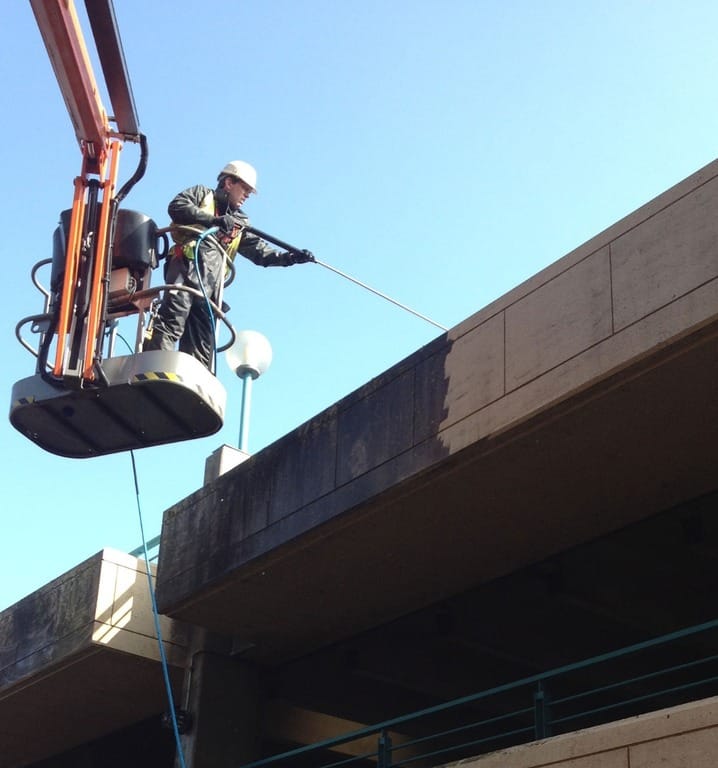
Uses high pressure water to clean robust surfaces such as concrete, brickwork and some metal cladding. Ideal for removing dirt, algae and heavy soiling.
Steam Cleaning Including DOFF Systems
Used for sensitive or historic surfaces. Steam cleaning lifts contamination using low pressure and high temperature.
Chemical Cleaning
Specialist detergents are used where required, for example in removing algae, carbon staining or stubborn dirt.
Manual Cleaning
Used for areas where machinery is unsuitable or for detailed work such as around signage or window frames.

Cleaning Cladding, Brick, Render and Glass Facades
Each type of facade material requires a different level of care.
Cladding Cleaning
Cladding panels often gather traffic film, algae and streaking. Techniques vary depending on whether the cladding is powder coated, aluminium, composite, steel or UPVC.
Brick and Masonry Cleaning
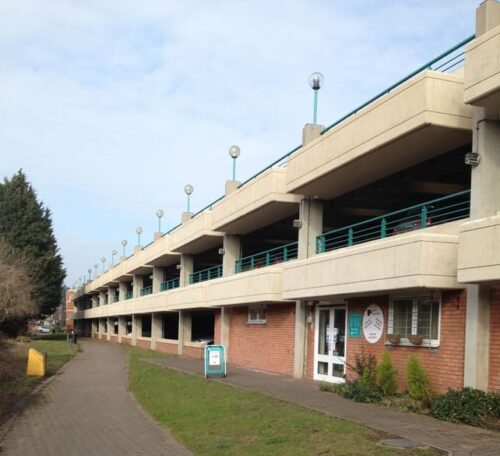
Brickwork can tolerate controlled pressure but may require steam cleaning or chemical pre wash on older or historic buildings.
Render Cleaning
Render stains easily and should never be cleaned with direct high pressure. Soft washing is the safest and most effective method.
Glass Facade Cleaning
Glass facades are cleaned using pure water systems, steam cleaning or specialist detergents depending on the level of contamination.

Access Methods for Building Facade Cleaning
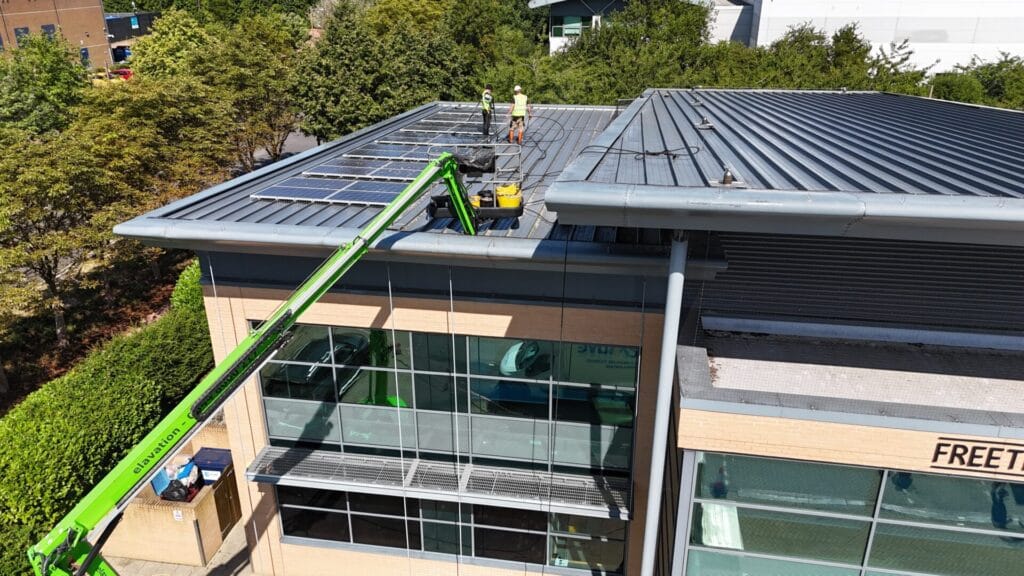
Large or tall commercial buildings require professional access solutions. These include:
- Mobile Elevated Work Platforms (MEWPs)
- Scissor lifts
- Boom lifts
- Rope access for high rise buildings
- Scaffold for extensive projects
- Long reach water fed pole systems
Working at height must always follow strict safety procedures.
Environmental and Safety Considerations
Cleaning commercial buildings requires careful planning to ensure safety and compliance.
Professionals follow:
- COSHH regulations
- RAMS and method statements
- Water run off control
- Safe chemical handling
- Environmental protection procedures
- Use of appropriate PPE
- Controlled access exclusion zones
This ensures the cleaning process is both safe and legally compliant.

Benefits of Regular Building and Facade Washing
Businesses benefit from:
- Improved kerb appeal
- A cleaner and more professional appearance
- Protection against long term surface damage
- Longer lifespan of building materials
- Health and safety improvements
- Prevention of algae, mould and pollution build up
- Higher property value
Regular cleaning is more cost effective than large restoration projects caused by years of neglect.
How Encanto Cleans Commercial Building Facades
Encanto uses professional equipment, surface specific cleaning methods and safe access techniques to restore building exteriors. Their team can clean:
- Shops and retail buildings
- Offices and business parks
- Warehouses and industrial units
- Schools and public buildings
- Apartment blocks
- Hotels and leisure buildings
Each project is assessed individually to select the correct method and ensure consistent, safe results.

1. How often should a commercial building be cleaned?
Most buildings benefit from annual cleaning. High traffic areas or properties near main roads may require cleaning twice a year.
2. Will power washing damage my building facade?
Not when carried out by professionals. They assess the material first and choose the correct pressure level or soft washing method.
3. Can render be power washed?
Render should never be cleaned with direct high pressure. Soft washing is the recommended method.
4. What is the best method for cleaning cladding?
The method depends on the cladding type. Many cladding systems respond well to low pressure washing combined with detergents or steam cleaning.
5. Can you remove black streaks from cladding?
Yes. Black streaks are usually caused by pollution or algae and can be removed with the correct cleaning solution and a controlled rinse.
6. Do you need to close the business during facade cleaning?
Not usually. Most cleaning can be completed externally with minimal disruption.
7. Is steam cleaning better for older buildings?
Steam cleaning is ideal for older or sensitive surfaces because it uses low pressure and high temperature.
8. Will building washing remove mould and algae?
Yes. Surface cleaning combined with biocide treatment removes algae and delays regrowth.
9. Can commercial buildings be cleaned in winter?
Yes. Most cleaning can take place year round, although extreme weather may affect scheduling.
10. Do you provide access equipment or should the client arrange it?
Encanto arranges all necessary access equipment such as MEWPs or scaffold as part of the project.
Go back to ‘Methods, Equipment & Safety‘
Read the next page ‘Industrial Power Washing‘