
Graffiti Removal and Surface Restoration

Graffiti can significantly damage the appearance of commercial buildings, shops, public spaces and industrial sites. It can affect customer perception, reduce property value and attract further vandalism if left untreated. Professional graffiti removal restores surfaces safely and prevents long term staining or deterioration.
Commercial graffiti removal requires specialist products, the correct cleaning method and trained technicians who understand how to protect the underlying surface. This section explains how graffiti removal works, the equipment used and the safest approach for brick, render, stone, metal and painted surfaces.
This guide explains how building and facade washing works, the methods used by professionals, and how businesses benefit from regular exterior cleaning. It also covers the safest way to clean brickwork, render, cladding, metal panels and glass facades without causing damage.
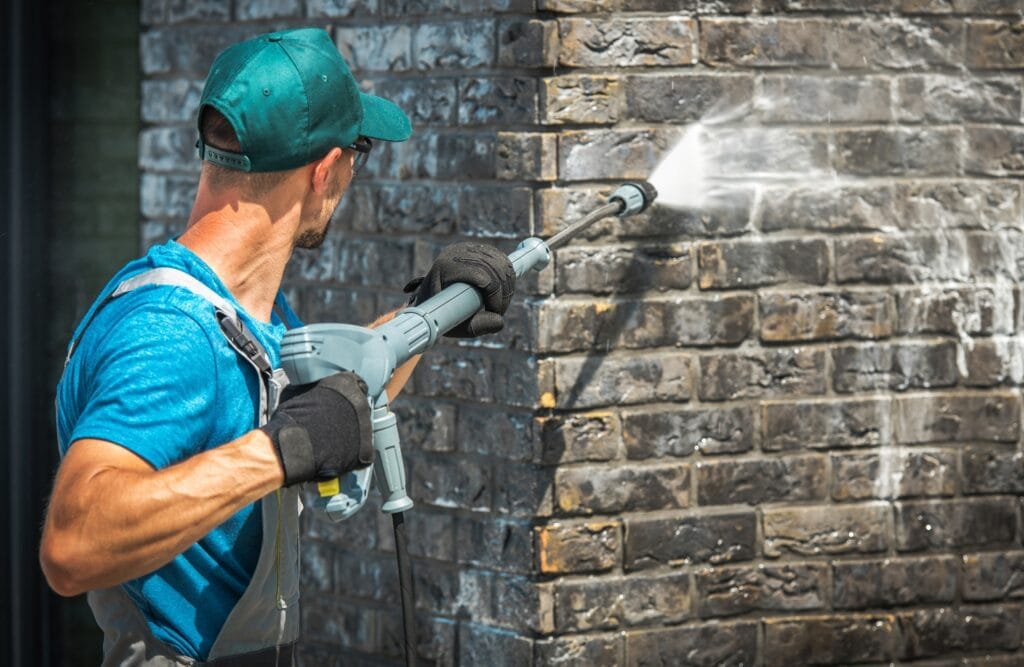
Why Professional Graffiti Removal Is Essential
Graffiti often contains strong pigments and spray paint that bond tightly to surfaces. Attempting to remove graffiti using standard cleaning equipment can:
- Spread the paint
- Push pigment deeper into the material
- Damage render and paintwork
- Etch brick or stone
- Cause uneven patchy cleaning
Professional graffiti removal ensures the surface is cleaned safely without damage.
Types of Graffiti Found on Commercial Buildings
Graffiti can take many forms including:
- Spray paint
- Permanent marker
- Stencils
- Acid etching
- Fly posting adhesives
- Paint pens
- Chalks and powders
Each requires a different treatment method. Professional technicians test the surface to identify the safest product and process.


Graffiti Removal Techniques
Chemical Graffiti Removers
Specialist chemicals dissolve spray paint and pigments without damaging the underlying material. These are different from household cleaners and must be applied safely.
Steam Cleaning and DOFF Systems
Steam cleaning lifts graffiti from delicate surfaces such as historic brickwork, sandstone and limestone using low pressure and high temperature.
Power Washing
Used for durable surfaces such as concrete or metal. Pressure is controlled to prevent damage.
Manual Removal
Detail work around signs, windows and sensitive materials is carried out manually using safe solvents and soft tools.

Anti Graffiti Coatings
After removal, an anti graffiti coating can be applied to protect the surface. There are two types.
Sacrificial Coatings
A protective layer is applied to the surface. If graffiti appears, the coating is removed during cleaning and reapplied.
Permanent Coatings
These coatings form a long lasting protective barrier. Graffiti sits on the surface and can be removed easily without affecting the coating.
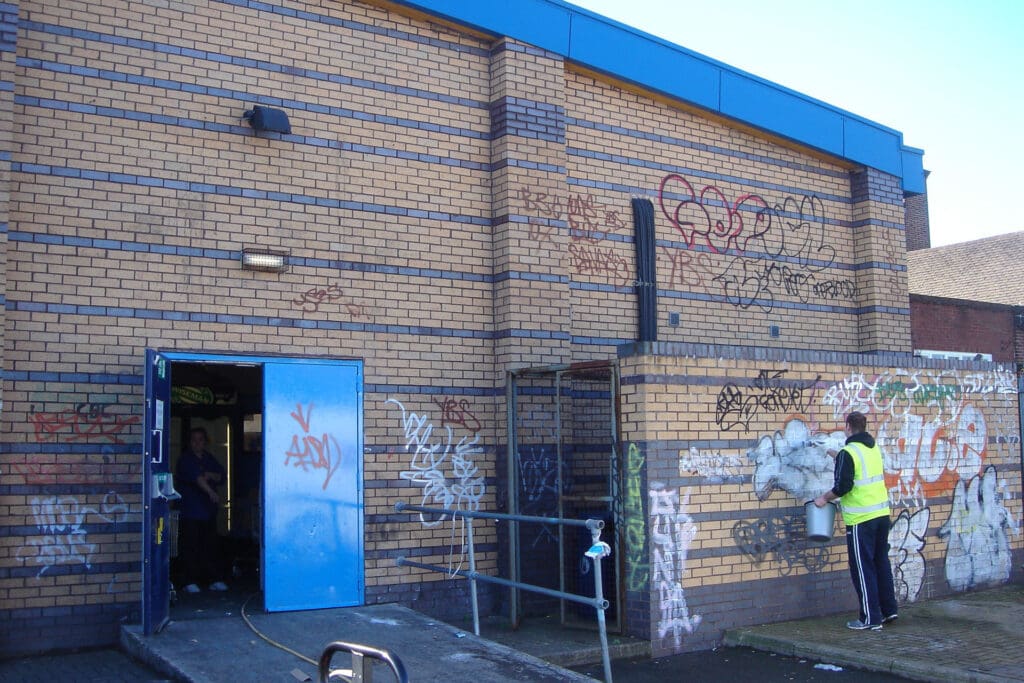
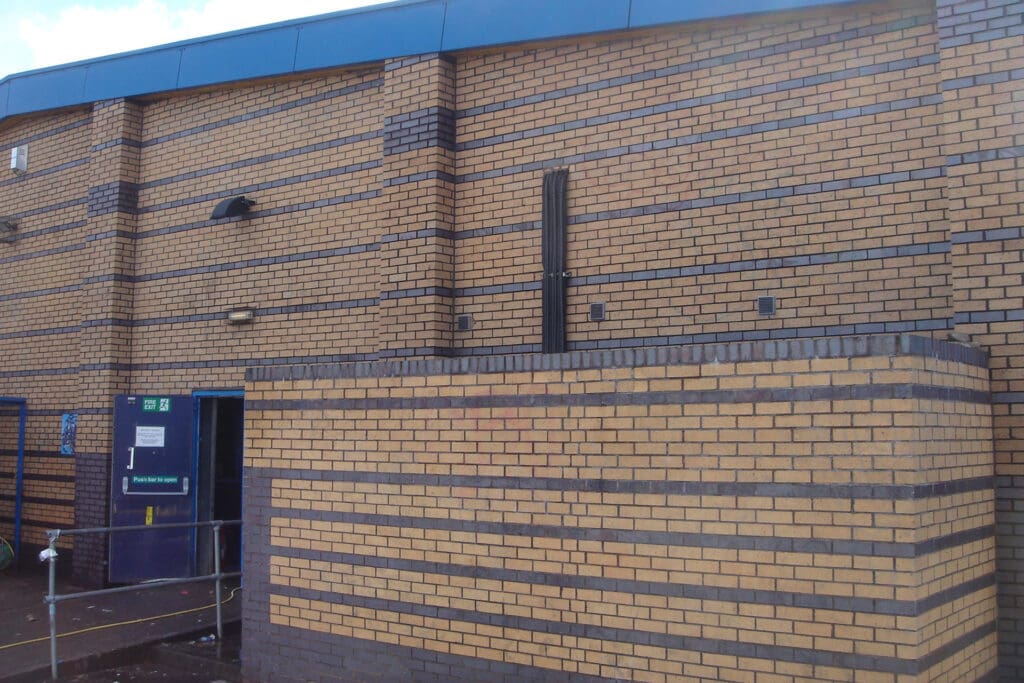
Surface Restoration After Graffiti Removal
Some surfaces may require restoration if graffiti has caused staining or etching. Restoration may include:
- Low pressure steam cleaning
- Brick and stone descaling
- Repainting
- Recoating cladding
- De-staining with specialist chemicals
Professional assessment ensures the correct restoration method is chosen.
Areas Where Graffiti Removal Is Common
Graffiti removal is often required on:
- Shopfronts
- Retail buildings
- Industrial units
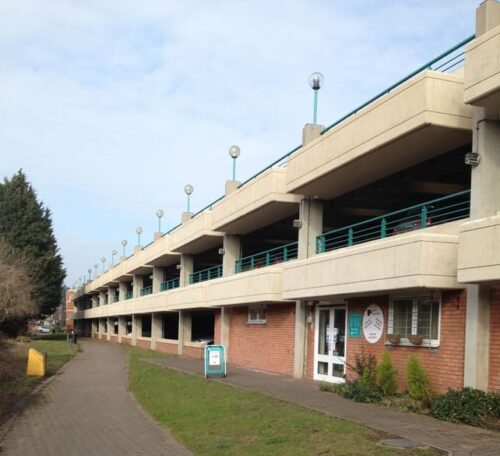
- Car parks
- Public buildings
- Bridges and subways
- Schools
- Brick walls and fences
- Train stations and transport hubs
Commercial properties benefit most from quick response to discourage repeat vandalism.
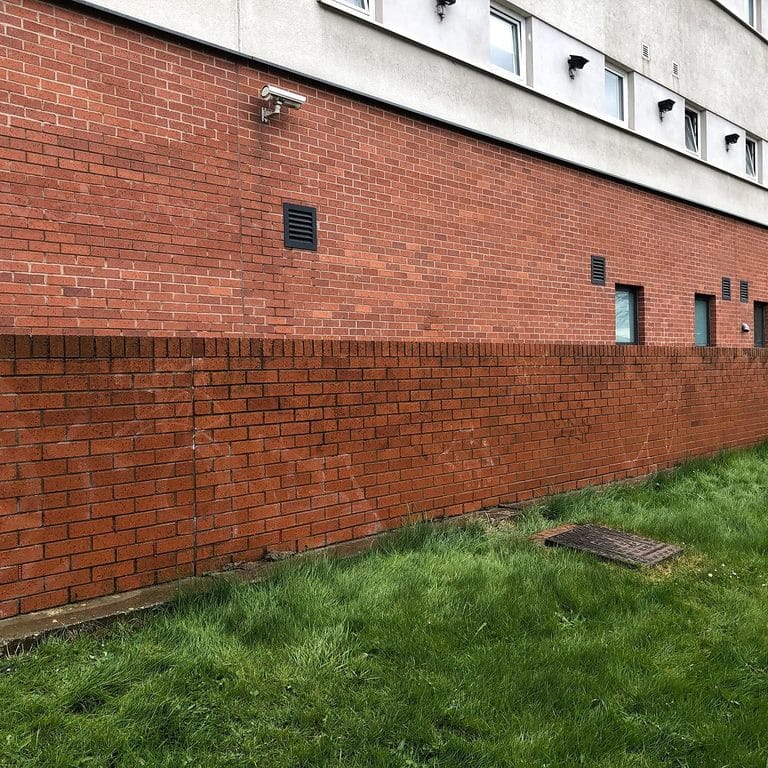
How Encanto Handles Graffiti Removal
Encanto provides full graffiti removal and surface restoration using safe, effective cleaning methods. Their technicians assess the material, test cleaning solutions and apply the correct method to avoid damage.
Encanto can also apply anti graffiti coatings to help prevent future issues.

1. Can graffiti be removed from brick?
Yes. Steam cleaning or chemical treatments safely remove graffiti from brick without damaging the surface.
2. Can you remove graffiti from painted walls?
Yes. If the wall is painted, it may require repainting after graffiti removal depending on the pigment strength.
3. What is the safest way to remove graffiti from render?
Render should be cleaned using low pressure, soft solvents and light steam cleaning. High pressure must never be used.
4. Does graffiti removal damage the surface?
Not when carried out professionally. The correct technique protects the building material.
5. How quickly should graffiti be removed?
As soon as possible. Quick removal discourages further vandalism.
6. Can you remove graffiti from signs and metal panels?
Yes. Metal surfaces respond well to chemical removal and controlled washing.
7. Do you offer anti graffiti coatings?
Yes. Both sacrificial and permanent coatings are available.
8. Can acid etching graffiti be removed?
In many cases, yes. It may require specialist restoration techniques.
9. Do you work on listed or historic buildings?
Yes. Steam cleaning is ideal for historic masonry.
10. Do you respond to urgent graffiti removal?
Yes. Encanto can provide quick response services depending on location.
Go back to ‘Render & Cladding Cleaning‘
Read the next page ‘Roof & Gutter Cleaning‘